
Human plus machine: the future of customer engagement
The four biggest themes from Mastercard’s Customer Engagement Summit 2025
Tuesday’s Excellence in Customer Engagement Summit by Mastercard Services brought together leaders from multiple sectors to explore how customer engagement is changing. We heard from diverse speakers spanning high street, luxury and ecommerce, yet all circled back to a common theme: customer engagement is still a people business.
We also delivered a breakout session: Human edge or AI mediocrity? (more on that at the end). Below, we’ve summarised four of the biggest themes that ran through the day.
1. The customer is evolving and so must we
Mastercard economist Max Lambertson opened with a reminder that shifts in behaviour aren’t confined to one generation. Whether it’s spending more on pets, eating out earlier or how events ripple into whole economies (e.g. Oasis concerts making hotels and bars busier), the evidence shows that customers are dynamic, not static.
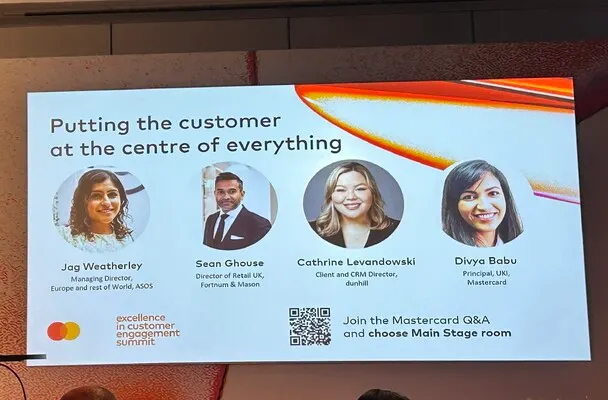
That set the stage for the retail panel with Jag Weatherley (ASOS), Sean Ghouse (Fortnum & Mason) and Cathrine Levandowski (Dunhill). Each explored what it means to put the customer at the centre of everything.
“At ASOS, AI supports everything from stock forecasting to markdown strategy, but the customer rarely sees the innovation. It’s quietly powerful.” – Jag Weatherley
“High net worth customers still expect deep craft, timeless quality and personal service. The innovation is in how you preserve tradition, not disrupt it.” – Cathrine Levandowski
“The customer wants to feel something. Retail can still surprise.” – Sean Ghouse
It was a clear reminder that there is no single “customer of today”.
2. Technology enables, but doesn’t define
AI and data ran through many of the day’s conversations. Vicky Adeney, VP, Data Strategy at Mastercard, explored personalisation’s benefits. Lauren Walker showed examples of AI reshaping media and marketing, nurturing creativity, cultivating empathy and balancing relevance and respect.
Senior VP Rupert Naylor shared an account of Anthropic’s Project Vend, about what can and did go wrong with AI, and talked about making smart bets and how to de-risk innovation with a framework. De-risking is at the heart of what we do at Magnetic so we loved the debate around the question, What are the biggest challenges teams face with innovation today?
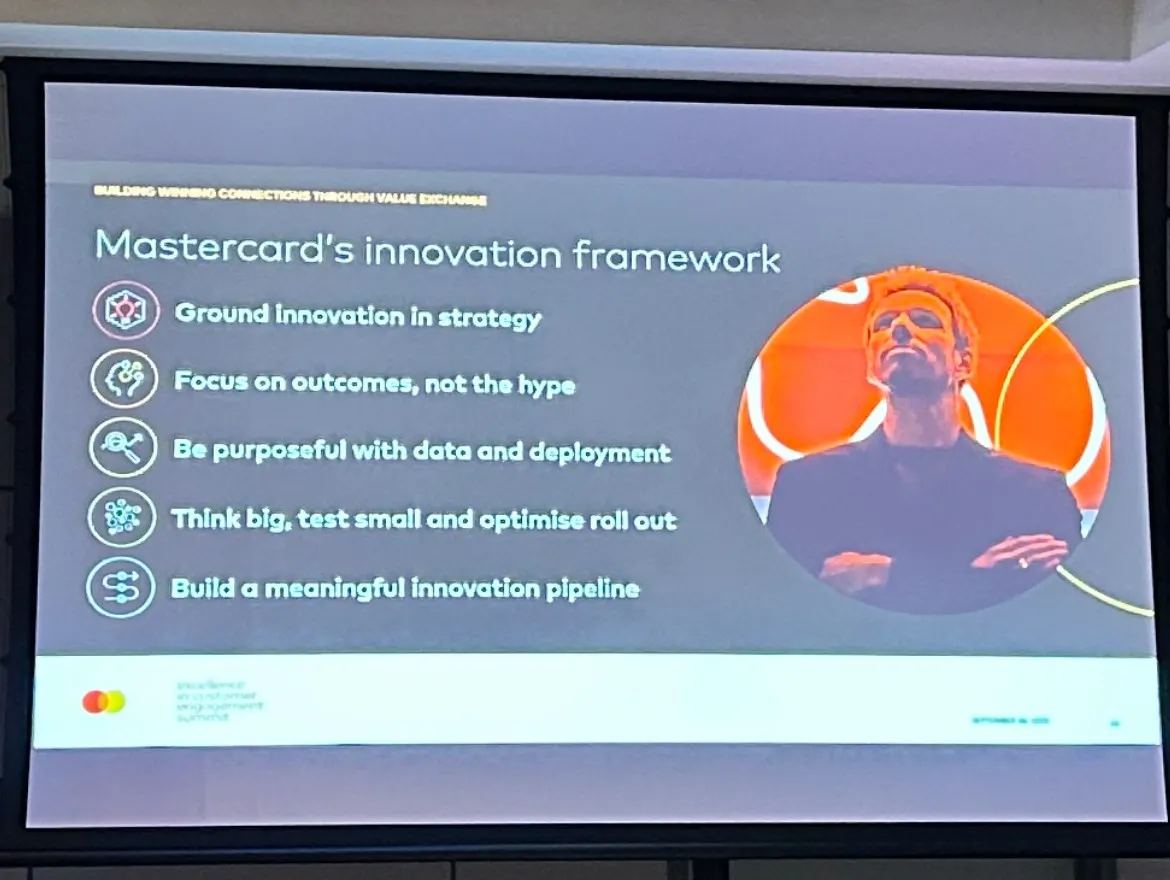
The tone was consistent: AI can forecast, analyse, personalise and unlock efficiency. But the experience it supports still needs to feel human.
Or, as Cathrine said on the retail panel: “Technology is an enabler. The experience remains human.”
3. Heritage, values and leadership matter
Nigel Oddy, CEO of American Golf, spoke about clearing away distractions that stop staff from focusing on customers. What stood out most was his decision to meet the company’s founder, Howard Bilton, to talk about the values he started with back in 1973. Those same principles are helping to turn the business around today.
There was a parallel here with Sean’s comments about heritage at Fortnum’s and Cathrine’s focus on timeless craft at Dunhill. Innovation doesn’t always mean breaking from the past. Often it means returning to what is most important.
4. Future talent and the human edge
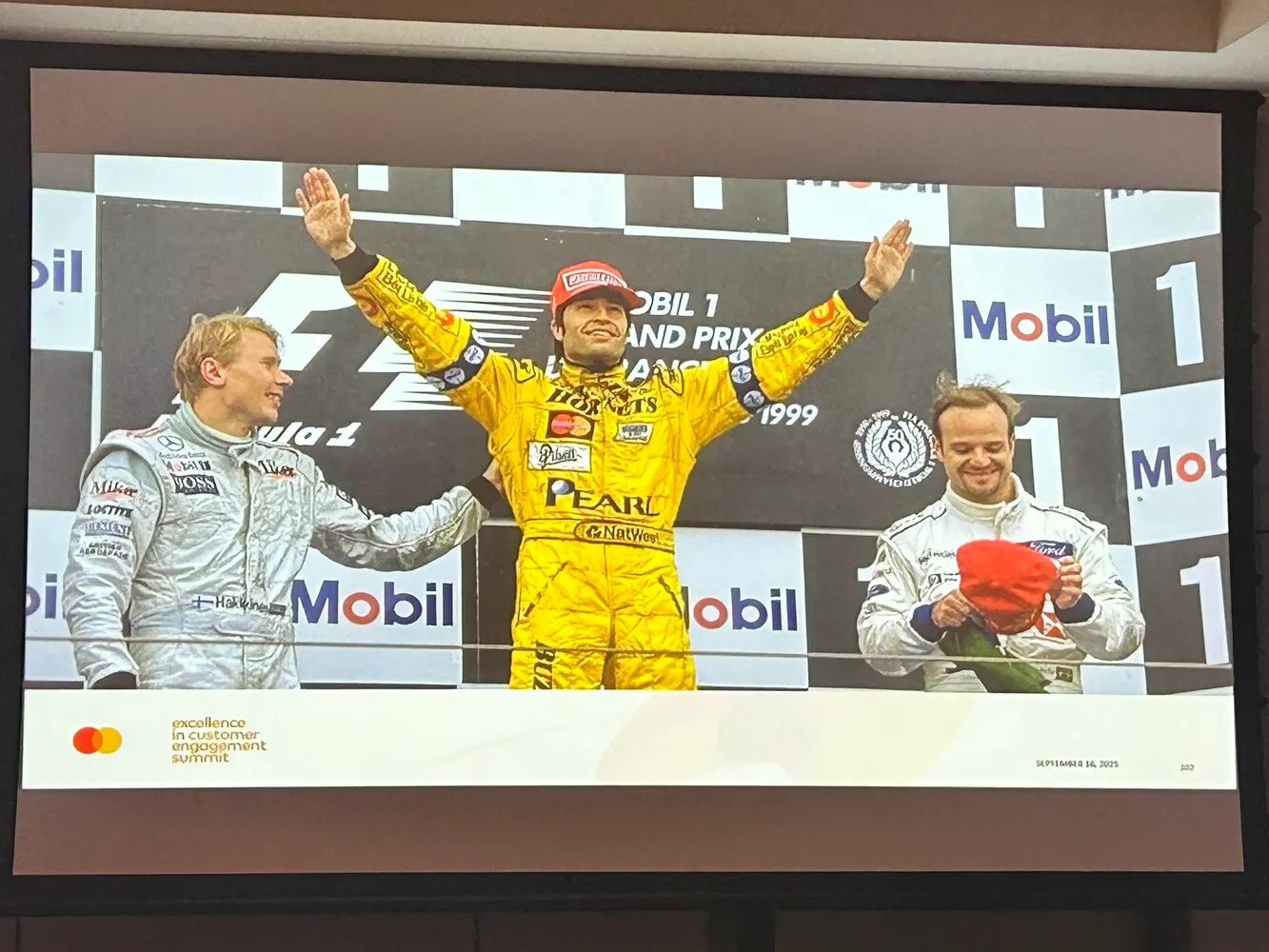
The closing word went to Mark Gallagher, Formula 1 executive, broadcaster and author. He drew on his experience in F1 to tell the story of a French Grand Prix win in 1999 by Heinz-Harald Frentzen for the Jordan team. It was a reminder that despite all the data, precision and technology in F1, it’s people, culture and leadership that create winning teams.
A shared conclusion
Whether it was discussions about developing AI skills or mentoring retail talent, or the breakout session with myself and my colleague Simon Gore, this question kept surfacing: what can technology take off our plates so that humans can do what only humans can?
We explored how AI can accelerate creative tasks and jobs to be done, personalise at scale and generate content at speed, but also how easy it is to lose sight of the human edge. It wasn’t about drawing a line between humans and machines, but about asking ourselves what we choose to automate and what we should never automate.
If there was one shared conclusion, it’s that the future of customer engagement isn’t a choice between human or AI. It will blend tradition with technology, scale with craft and efficiency with empathy. Above all, we must clearly keep humans in the loop.
Human edge or AI mediocrity? If you’d like us to run a similar session for your organisation, to build your team’s confidence in AI, drop us a note at


